
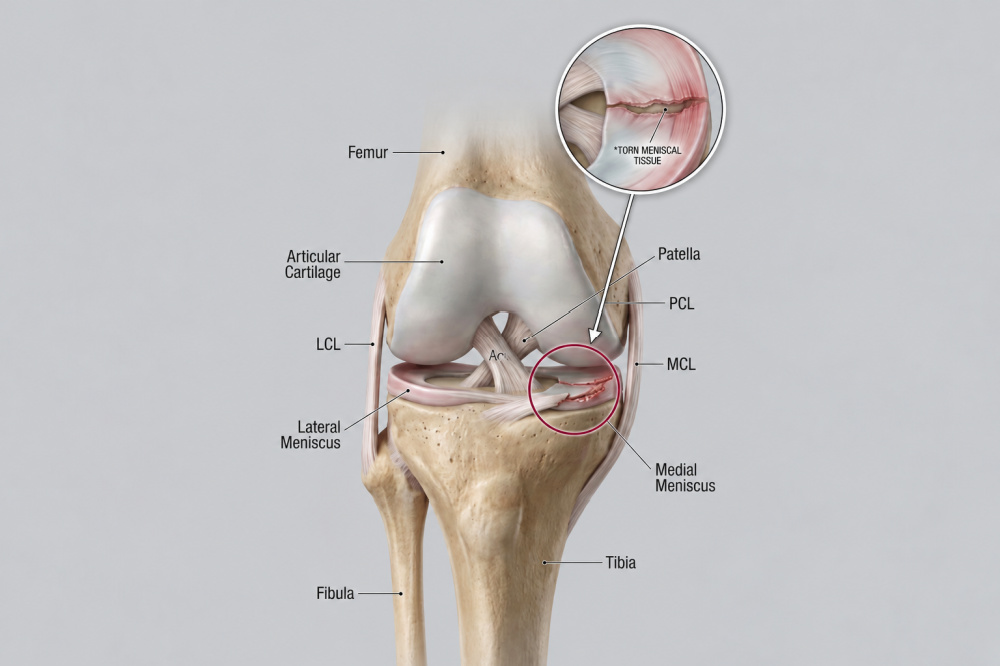
The posterior cruciate ligament (PCL) is the strongest ligament in the knee, making it less susceptible to injury.
Its role is to stop the shin bone from sliding backwards on the thigh bone. This injury usually presents with pain at the back of the knee, swelling and instability.
The posterior cruciate ligament (PCL) is the strongest ligament in the knee, making it less susceptible to injury. Its role is to stop the shin bone from sliding backwards on the thigh bone. This injury usually presents with pain at the back of the knee, swelling and instability.
PCL injuries are less common than ACL injuries and tend to happen differently, often from a direct blow to the front of the shin (such as a dashboard injury in a car accident), a heavy fall onto a bent knee, or forceful hyperextension of the knee during sport.
At New Lynn Physio, your physiotherapist will undertake an assessment asking you specific questions and completing special tests to assess if they think you may have injured this ligament, and to grade the severity of the injury.
Do PCL injuries need surgery?
Less often than you might expect. Unlike the ACL, isolated PCL injuries (particularly milder grade I and II sprains, and even some grade III tears in lower-demand individuals) are usually managed successfully through physiotherapy alone, without surgery. Surgical reconstruction is generally reserved for more severe cases involving significant ongoing instability, or where the PCL is injured alongside other ligaments in the knee (a multi-ligament injury).
This makes an accurate initial assessment particularly important, your physiotherapist will help determine the grade of your injury and the most appropriate treatment pathway for you.
Our approach to PCL rehabilitation
PCL rehabilitation looks a little different to ACL rehab, because protecting the healing ligament in the early stages requires some specific precautions:
- Early protection: in the initial weeks, we focus on managing swelling, protecting the ligament (avoiding positions that place the shin under backward stress), and gradually restoring range of motion. A knee brace is often used during this stage to support healing.
- Quadriceps-focused strengthening: building quadriceps strength is a priority in PCL rehab, as strong quadriceps help support the knee and reduce load on the healing ligament. Hamstring strengthening is introduced more cautiously and progressed later than in most other knee injuries, since hamstring contraction can place additional stress on a healing PCL. Where the quadriceps are struggling to activate, or heavier loading isn’t yet appropriate, we may use neuromuscular electrical stimulation (NMES, e.g. Compex) or blood flow restriction (BFR) training to support strength gains.
- Restoring balance and control: proprioception and balance training are added as your knee tolerates it, helping restore confidence and stability.
- Return to activity or sport: a gradual, criteria-based return to higher-level activity, guided by your strength, control and confidence rather than time alone.
Recovery timeframes are generally faster than ACL rehabilitation: many people managed conservatively return to sport-specific activity within 2–3 months, while those requiring surgical reconstruction typically take longer, often 6–7 months before returning to full sport.