
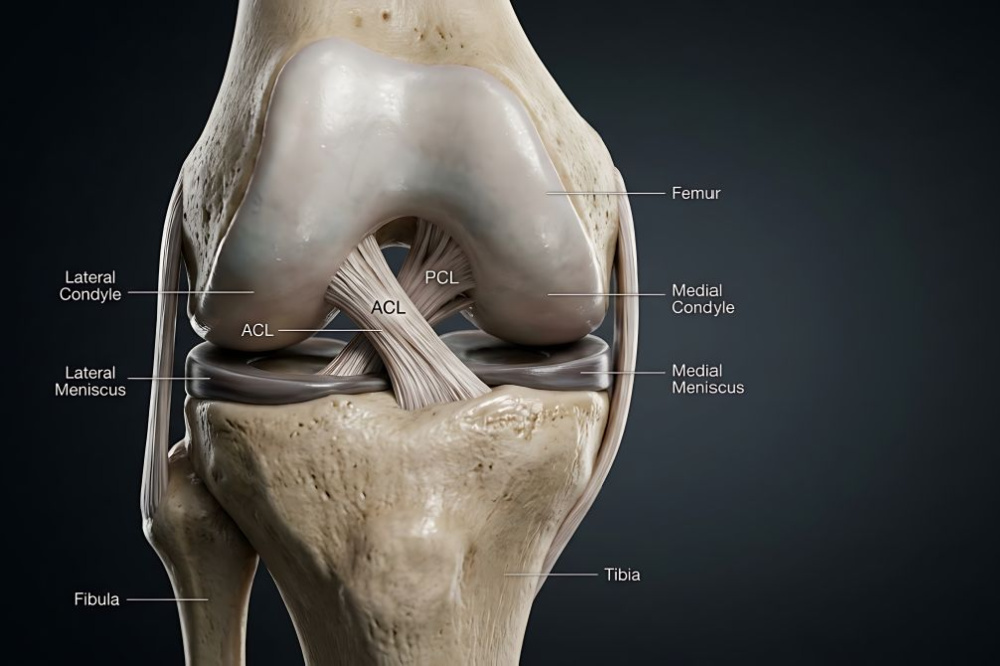
ACL Rehabilitation:
Criteria based. Goal driven.
Working with you to get you back performing at your best.
Book an assessment today and start a plan built around you! Whether your goal is walking comfortably, returning to work, getting back to the gym or stepping onto the field again, we can help you move forward with a structured rehabilitation plan.
If you have torn your anterior cruciate ligament, or you are recovering after ACL reconstruction surgery, the right rehabilitation plan can make a huge difference. At New Lynn Physio we use personalised planning, clear progress markers and education at every stage to achieve YOUR goals.
The ACL is one of the key ligaments that helps stabilise the knee during twisting, landing, cutting and sudden changes of direction. ACL injuries are common in sports such as football, skiing, basketball, rugby and netball, but they can also happen during everyday slips or awkward landings.
Read Poppy’s story further down this page to see how one of our patients got through her ACL rehabilitation.
How ACL rehabilitation works
ACL rehabilitation is a progressive, criteria-based programme that rebuilds movement, strength, balance, power, confidence and sport-specific control. We use milestones and VALD technology (force plates and dynamometry) to know when you are ready for the next step.
In the early stages, particularly after surgery, the quadriceps often struggle to activate properly, a phenomenon known as arthrogenic muscle inhibition. Where appropriate, we use tools such as neuromuscular electrical stimulation (NMES, e.g. Compex) to help re-activate the quadriceps, and blood flow restriction (BFR) training to build meaningful strength using very light loads while your knee isn’t yet ready for heavier training. Both are well supported by research as effective adjuncts to standard rehabilitation exercise.
- Early recovery: settle pain, swelling and regain movement
- Strength and control: rebuild the foundation
- Running, jumping and agility: prepare for higher loads
- Return to sport or full work: test, train and transition
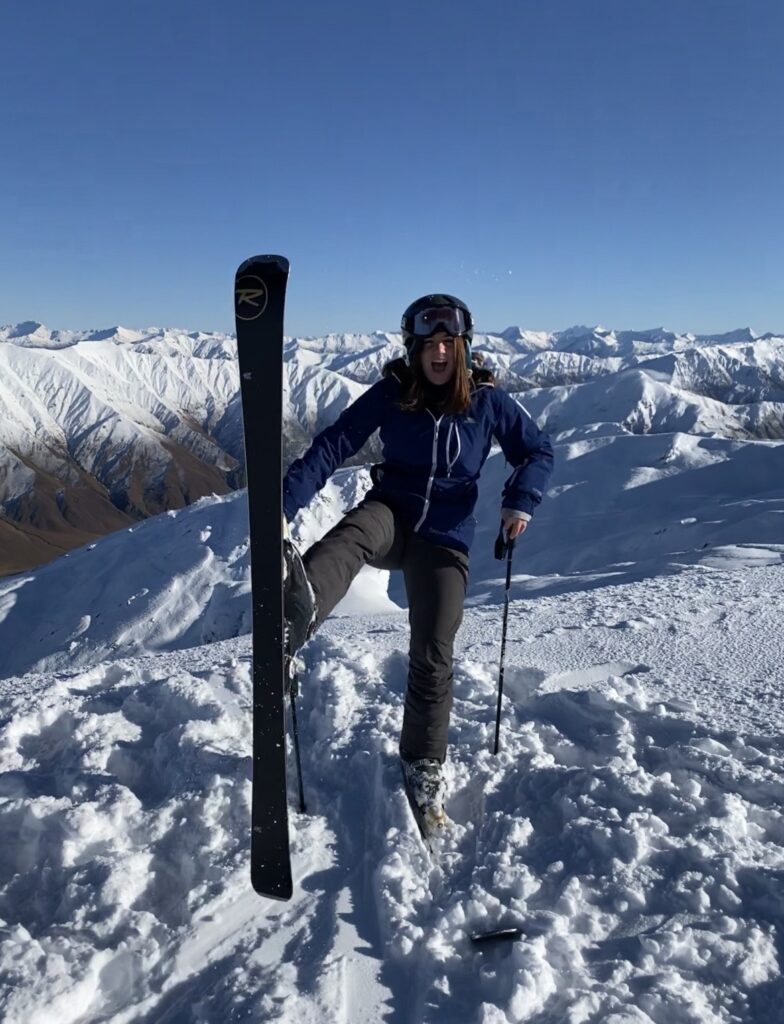
Patient story: Poppy’s ACL journey
What happened when you injured your ACL?
I tore my ACL while skiing in France which really wasn’t ideal! I slipped on ice and my knee twisted in a bit of an unnatural movement. I did hear a popping sound but didn’t really have any swelling when the injury occurred, so it came as a surprise to me when I got told back in NZ that I had fully torn my ACL.
What were you most worried about after the injury or surgery?
I think I was most worried about not getting my old active life back. It’s pretty daunting coming away from surgery on crutches thinking that you are supposed to get to a point where you are not constantly worried about your knee and are able to run and jump like how you did before the injury.
Did you feel you understood why you were doing each stage of your rehabilitation programme?
I had a fantastic physio who talked me through every stage of my rehabilitation programme which really helped me understand why each exercise was important. Being a part of the Careway ACL surgical programme helped me to stay accountable and consistent with my rehab.
How long did your rehab take?
It took me about a year and a half from surgery to pass my return to sport test and get my knee back up to strength again.
Was there any part of the programme that you found most valuable?
Having weekly sessions with Nicky (my physio) was really great. I found it super helpful when Nicky would come to the gym with me to show me new exercises and correct my technique. The strength tests were also really valuable to see how I was progressing. It motivated me to push myself at the gym so that I could keep improving my results with every test.
What challenges did you have to overcome during your rehab?
Rehab wasn’t a smooth journey for me as I had pain in the front of my knee that slowed down my ability to build my strength back up quickly. I really battled with this and it was frustrating at times to see I was losing the strength I had worked so hard to gain because pain was limiting my ability to push myself at the gym.
What are you able to do now that once felt difficult after your injury?
I can now run and play sports which seemed at the time of surgery an impossible target to get to. Having full confidence in my knee again has been a work in progress but I definitely worry a lot less about my knee these days.
How confident do you feel in your knee now compared with when you started?
So much more confident! I feel like I can play sport now without having to worry about if my knee is going to hold up and this confidence is improving with every sport I return to.
Have you returned to your sport or other activities?
I have just finished up a season of indoor netball and have taken up running and hiking again which has been great! I am still yet to return to football or skiing but maybe next season I’ll give it a go!
What advice would you give someone who has just torn their ACL?
The best advice I would say is to really give the rehab your all and follow the programme given to you by your physio. The hard work really does pay off as redoing your ACL is something none of us want. Do it once, do it right and get yourself a fantastic physio like Nicky who can guide you through the recovery process as it is a long and sometimes frustrating journey!
Looking back, what made you feel supported throughout your rehabilitation?
Nicky was amazing at supporting me through my rehab. She was so caring and really adjusted my programme to what worked for me, especially with the pain aspect I was navigating. Careway was also a great programme to be a part of as it made rehab so much easier and accessible.
Poppy’s snapshot
- Injury: ACL tear while skiing
- Treatment: ACL reconstruction (ACLR) using a patellar tendon graft, followed by criteria-based rehabilitation
- Time from surgery to passing return to sport testing: about 18 months
- Setback along the way: pain at the front of the knee slowing strength gains (read more about pain at the front of the knee)
- Now: back to indoor netball, running and hiking
Frequently asked questions
Further resources
For patients who’d like a structured, evidence-based roadmap to refer to alongside their treatment with us, we recommend the Melbourne ACL Rehabilitation Guide: developed by sports physiotherapists Randall Cooper and Mick Hughes. It’s a free, criteria-driven ACL rehabilitation protocol used by clinicians and patients worldwide, covering everything from pre-op preparation through to return to sport.